Live Podcast #3: Do Thinner Orthotics Really Last? And Other Footwear Myths We Hear Every Week
Let’s break down the biggest takeaways.
“These look thinner than my old orthotics… will they last?”
It’s one of the most common concerns we hear.
Yes — our orthotics are intentionally thinner. That’s not a cost-saving shortcut. It’s a design decision.
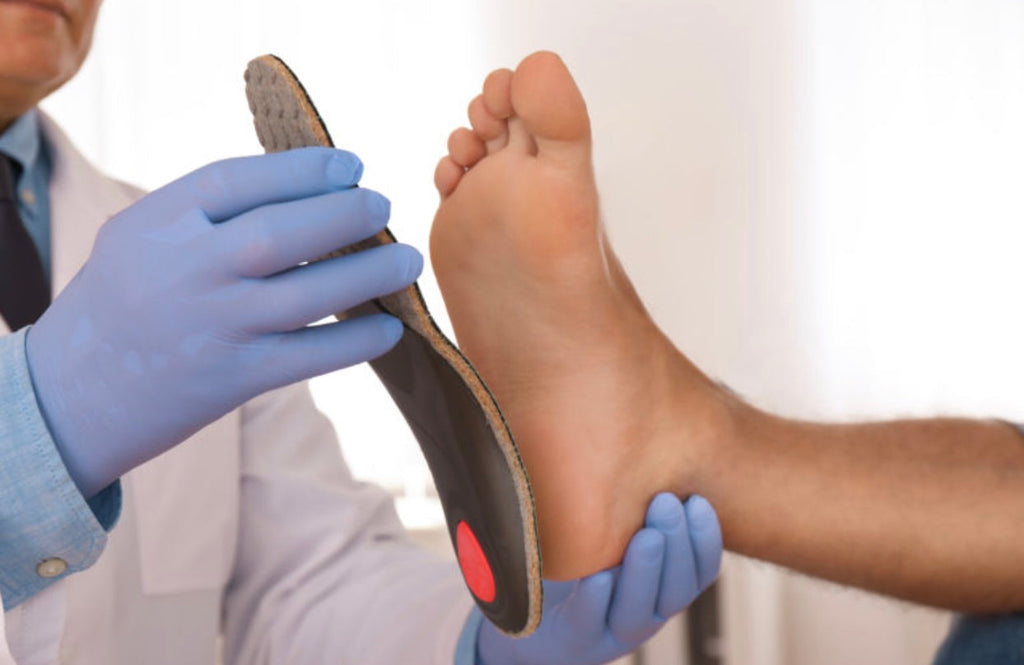
Thick, rigid insoles often force people to size up their shoes or only wear orthotics in bulky sneakers. Stride Soles are designed to fit in more of your shoes, which means you actually use them consistently — and consistency is what drives long-term improvement.
What about durability?
Our orthotics are made from medical-grade TPU (thermoplastic polyurethane) — the same material used in orthopedic clinics in Germany.
How long they last depends on:
-
Your body weight
-
How many hours per day you wear them
-
Whether you’re walking, running, or standing all day
-
How supportive your shoes are
In most cases, the material outlasts the shoe.
But here’s the important part:
Stride Soles are not just passive supports — they’re training tools. As your mechanics improve over time, your feet and posture change. Many customers benefit from updating their orthotics after about a year, not because they’ve “worn out,” but because their body has progressed.
“Why do they feel weird at first?”
Because your body is adapting.
Stride Soles are corrective, not just cushioned inserts. That means they gently guide your feet toward better alignment, which changes how muscles activate up the chain — ankles, calves, knees, hips, even posture.
That adjustment period can feel:
-
Unfamiliar
-
Slightly sore in new muscle areas
-
Different than what you’re used to
This is normal.
That’s why we recommend a break-in period:
-
Week 1: ~2 hours per day
-
Week 2: ~4 hours per day
-
Gradually increase from there
Uncomfortable = normal adaptation
Pain = contact us (we’ll adjust)
Why the top layer gets “foot-shaped” over time
That imprint you see in the foam layer? That’s not wear and tear — that’s intentional.
The top cover uses a memory foam layer that compresses slightly in high-load areas (like under the big toe). This increases contact surface and reduces pressure per square inch, improving comfort and pressure distribution.
It’s not there for squishy cushioning. It’s there to help the orthotic conform to your foot like a glove.
The 5 Most Common Injuries Caused by the Wrong Shoes
Here’s where things got really interesting.
1️⃣ Plantar Fasciitis
Often worsened by: Super soft, unsupportive shoes
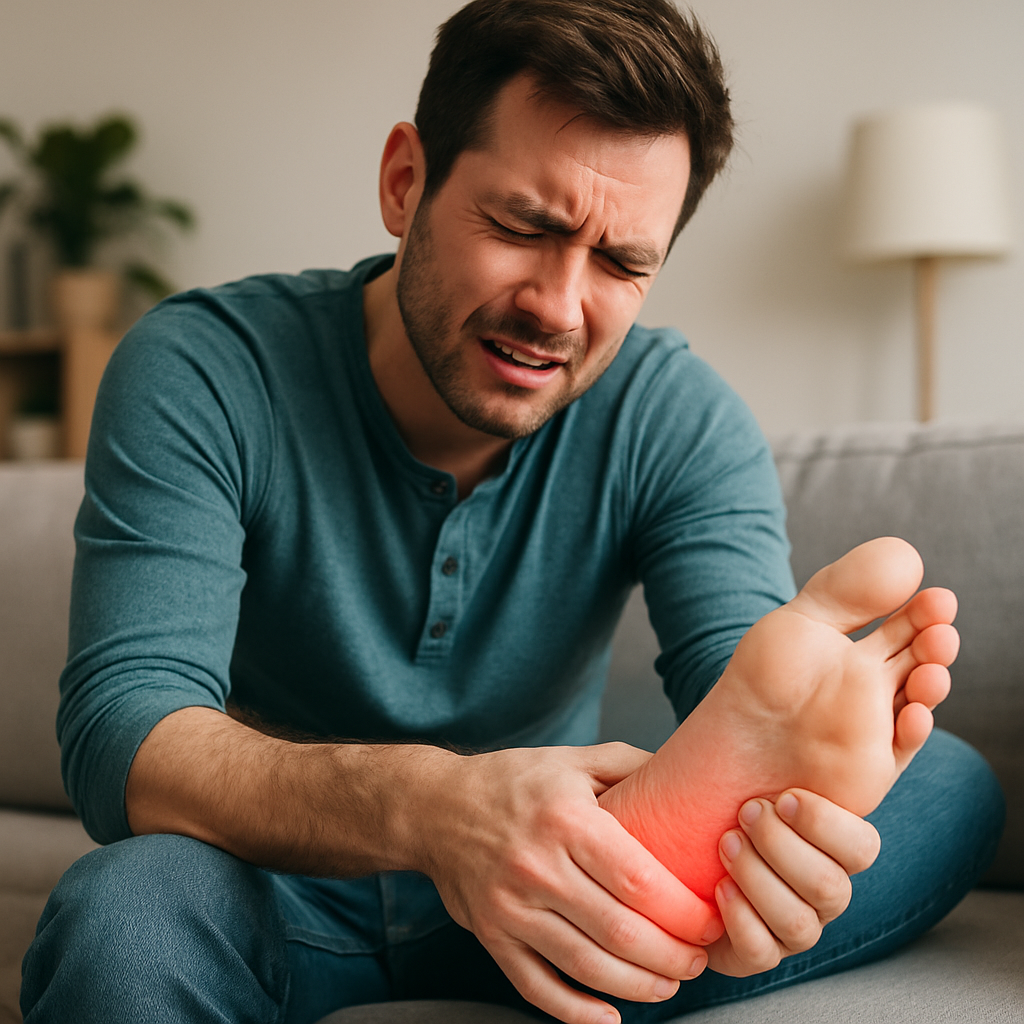
The plantar fascia is a strong band of tissue under your foot. When shoes are overly soft, the foot collapses inward more easily, overstretching this tissue and causing micro-tears near the heel.
Also risky: worn-out sneakers with uneven soles.
2️⃣ Shin Splints
Often worsened by:
-
Soft shoes that allow excessive pronation
-
High heels
The tibialis anterior muscle runs along the shin. When the foot collapses inward repeatedly, this muscle gets overstretched and irritated where it attaches along the shin bone, leading to inflammation and sharp pain.
High heels add another problem: they change your gait mechanics, forcing that muscle to work overtime.
3️⃣ Bunions & Toe Pain
Often caused by: Narrow, pointy shoes
Your big toe is supposed to spread slightly for balance. Tight toe boxes force it inward, leading to joint misalignment and bunion formation over time.
If your toes can’t spread, your stability drops — and stress increases everywhere else.
4️⃣ Achilles Tendonitis
Often worsened by: Soft, unstable shoes
Your Achilles tendon is built to move up and down, not side to side. When shoes allow too much inward or outward rolling, the tendon experiences abnormal strain and micro-injury.
Also risky: sudden changes in shoe type (for example, switching from high heels to flat shoes overnight).
5️⃣ The Big Surprise: Soft Shoes Are Often the Culprit
This is the counterintuitive truth.
Shoes that feel like walking on marshmallows often:
-
Let your foot collapse
-
Increase muscle strain
-
Reduce stability
-
Worsen alignment problems over time
Ultra-cushioned shoes (like some models from HOKA) were originally designed for downhill trail running, where shock absorption from rocks matters. They weren’t designed for standing all day on flat hospital or office floors — yet that’s how many people use them.
Soft doesn’t always mean healthy.
Orthotics Are Only as Good as the Shoes You Put Them In
One of the most important closing points:
A corrective orthotic and a stable shoe work as a team.
Even the best orthotic can’t fully correct mechanics if:
-
The shoe sole is too soft
-
The heel is unstable
-
The shoe is worn down
Better movement comes from the right orthotic + the right shoe + gradual adaptation.
Coming Next Week 👀
Next episode, we’re joined by the legendary Dietmar Walter — master pedorthist and the “godfather” behind Stride Soles’ design philosophy — sharing his journey from small-town cobbler to world-class orthopedic footwear expert.
You won’t want to miss that one.
Have a question about your feet or footwear? Send it in — we might cover it on the next Stride Soles Go Live.