Alex Franks
January 7, 2024
StrideSoles have really helped me out, they are really affordable compared to what Iused to get a...


 180-Day Money-Back Guarantee
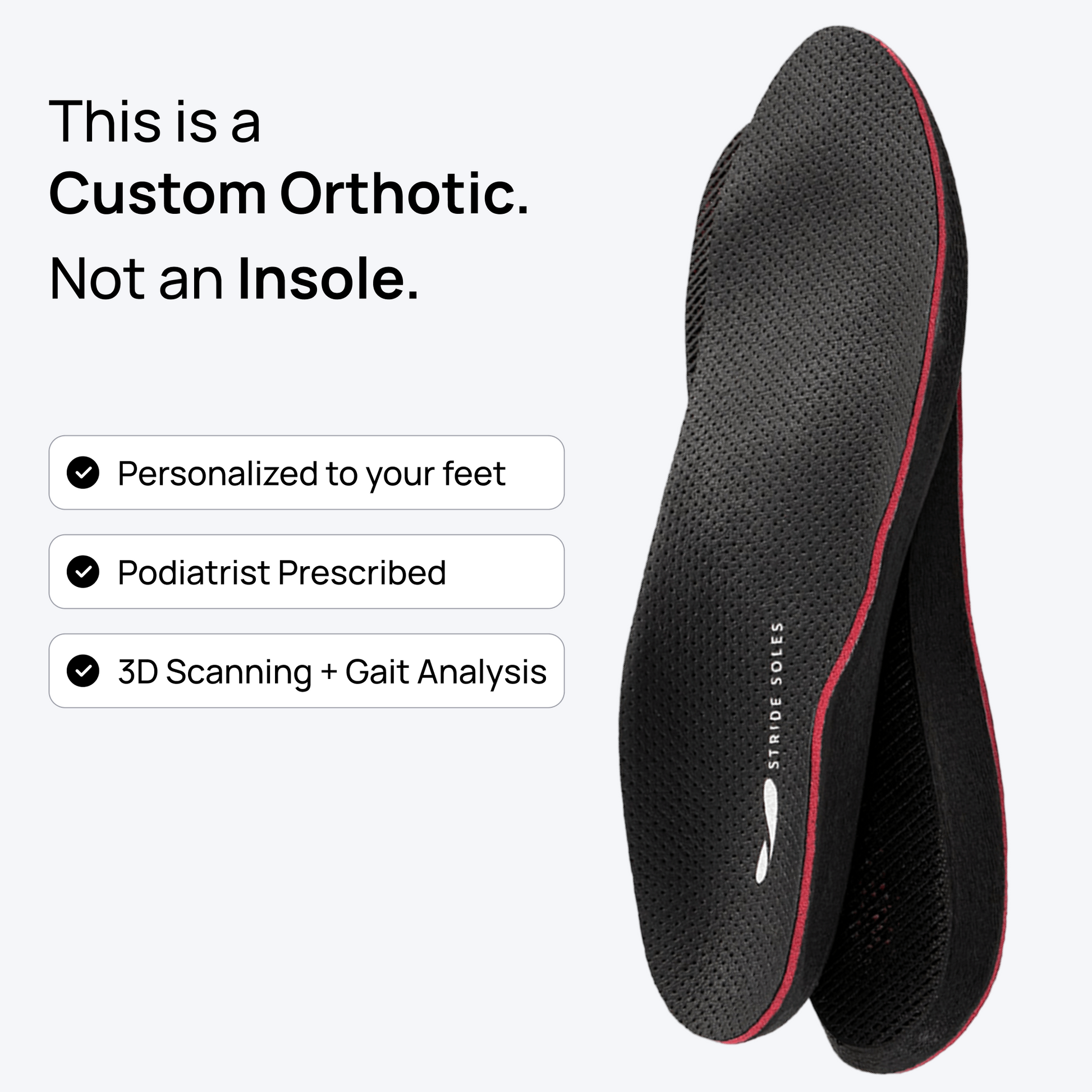
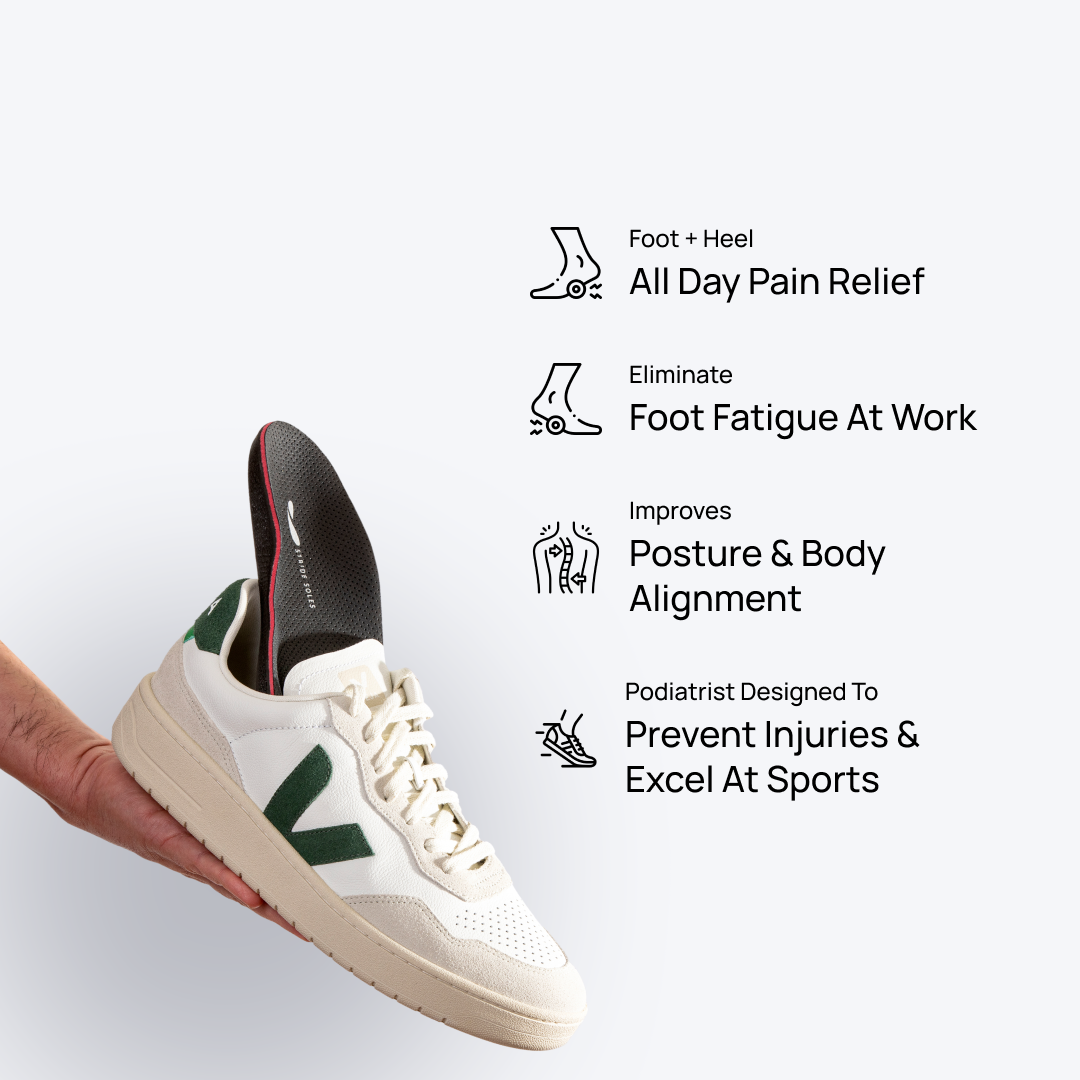
 Begin your day without the sharp heel pain of Plantar Fasciitis. Stride Soles are precision designed to take pressure off the Plantar Fascia band, giving you instant relief and long term healing. Each pair is custom made in Germany from a detailed 3D scan of your feet and fits perfectly inside the footwear of your choice, giving you increased support and comfort. Each pair of Stride’s is designed specifically for plantar fasciitis by featuring:
 HSA/FSA Accepted
180-Day Money-Back Guarantee

Free Shipment On All Orders

HSA/FSA Eligibility Guaranteed
Your satisfaction is our number one priority. If we are not helping you reach your goals, simply contact us and we will work with you to create a new custom orthotic. We will continue working with you for up to 6 months until you are satisfied. If we still don’t meet your needs, just let us know and we will refund your order.
All orders in the USA include free shipping. Additional rates apply for International and expedited orders
Every inch of the orthotic has been designed to optimize for heel pain relief


Get podiatrist-level biomechanical analysis without appointments, kits, or weeks of waiting.
| Features | Best ValueSTRIDE $249 | Podiatrist $400–$1K | Foam Impression Kit $250+ |
|---|---|---|---|
|
Gait Analysis
| |||
|
Clinician Access
| |||
|
Full-Length Shell
| |||
|
3D Foot Scan
| Select Clinics | ||
|
Time to Start
| 5 Minutes | Appointment Required | Kit Shipped (Return Required) |
|
Order to Delivery
| 10–15 Days | 3–6 Weeks | 3–5 Weeks |
180 Day Return Policy
The plantar fascia is a collagen-rich tissue that stretches lengthwise on the bottom of the foot, connecting the calcaneus (the heel bone) to the metatarsal heads (the base of the toes).
Some of its core functions include the following:
Because the plantar fascia is constantly exposed to these actions described above, it can easily experience microtears, inflammation, and degeneration, resulting in plantar fasciitis
Plantar fasciitis is generally caused by overuse or repetitive stress on the plantar fascia. There are, however, different factors that can be the underlying causes or triggers. Let's look at the most common of these.
Some of the common symptoms that can be indicative of plantar fasciitis include:
Given all of the above, to know if you have plantar fasciitis, ask yourself the following questions:
Answering yes to 3 or more of the above is a strong indication that you may have plantar fasciitis. However, since some other conditions, like heel spurs, fat pad atrophy, and Achilles tendinopathy, can have similar symptoms, you may need to visit your podiatrist for confirmation.
You can also do this simple self-test to confirm that the pain is related to the plantar fascia. While seated, try to pull your toes upward. This will stretch the plantar fascia. If you feel pain when you pull your toes, then there’s an issue with the plantar fascia.
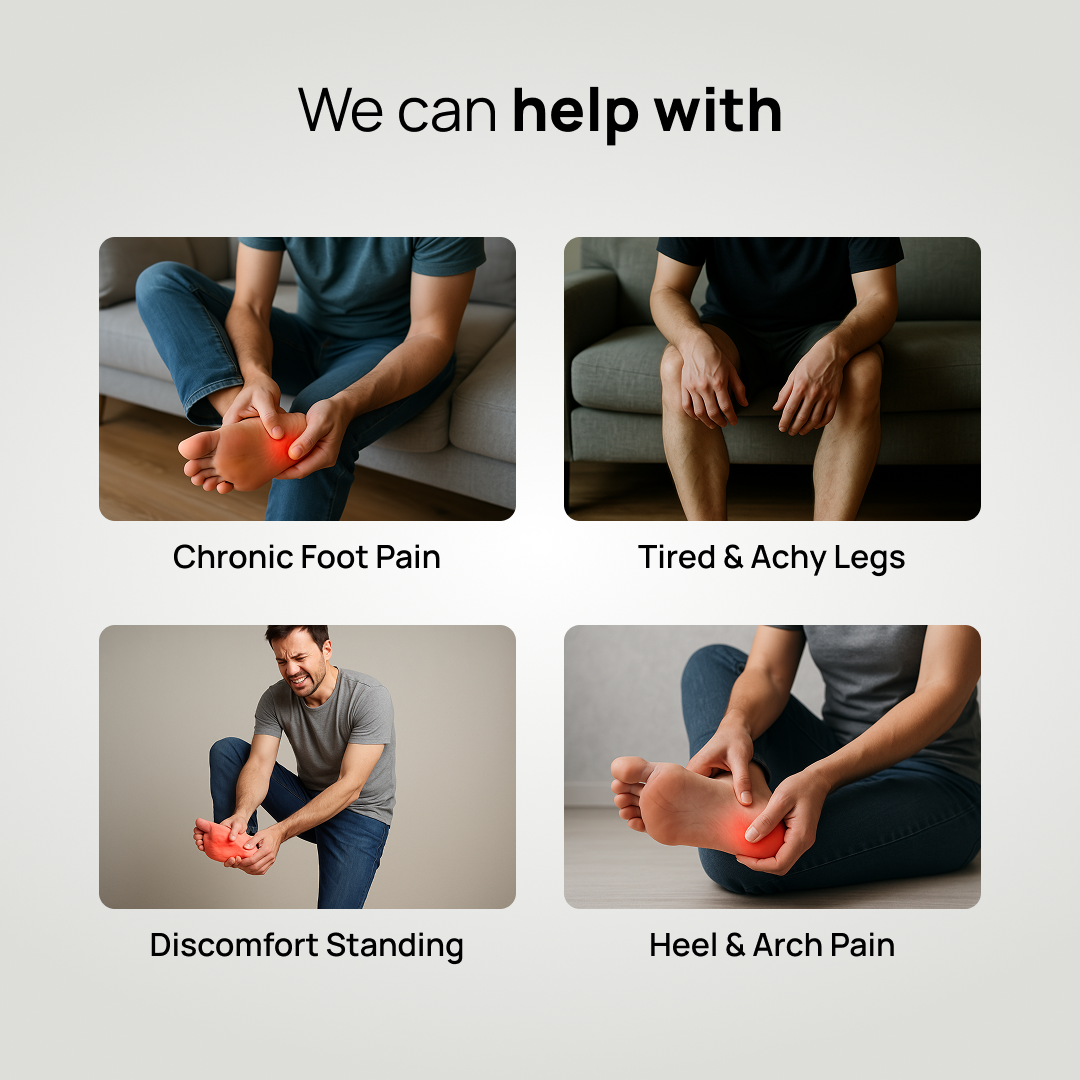
Plantar fasciitis occurs when the plantar fascia, the thick band of tissue running along the bottom of your foot, becomes inflamed or develops micro-tears from repeated stress. The result is that sharp, stabbing heel pain you feel with your first steps in the morning or after long periods on your feet. It's one of the most common causes of heel pain, affecting roughly 2 million Americans each year.
Over-the-counter insoles can provide temporary cushioning, but they aren't built to address the biomechanical issues that cause plantar fasciitis in the first place. Generic arch supports use a one-size-fits-all shape that doesn't match your foot's unique structure, which means pressure continues to build on the fascia in the same places that are already damaged. Relief fades quickly because the underlying problem hasn't changed.
Custom orthotics work differently. By mapping the exact contours of your foot through a 3D scan and analyzing your gait pattern, a custom orthotic can redistribute pressure away from the inflamed fascia, stabilize your heel, and control the pronation that puts excess strain on the tissue. This combination of targeted offloading and structural correction is why podiatrists consider custom orthotics a first-line treatment for plantar fasciitis. With the right support, the fascia can begin to heal rather than re-aggravating with every step.
For a closer look at what to expect during recovery, read our plantar fasciitis guide.
The following tips can help prevent plantar fasciitis:
This is the first thing to look at. The right footwear should have the following features:
Orthotic insoles can be a great help in preventing the occurrence of plantar fasciitis. This is because the right insole will:
To enjoy the full benefits that an orthotic insole can provide, you must get the right fit and right design.
Regular calf and foot stretches can help reduce stiffness in the calf muscles and Achilles tendon. Doing these stretches 2 to 3 times every day will increase both their flexibility and strength.
Some examples of simple stretches include:
According to Dr. Emily Chen, a physical therapist, the key is consistency. According to her, "daily stretching not only prevents plantar fasciitis but also improves overall foot resilience, reducing injury risk."
Plantar fasciitis is often caused by overuse, repetitive stress, obesity, poor footwear, tight calf muscles, and spending so much time standing or walking on hard surfaces.
Sharp, stabbing heel pain, especially with the first steps in the morning or after resting the foot for a while. The pain will often reduce as you keep walking but returns when you rest.
Mild cases can get better if you give the feet rest, allowing it time to heal itself and implement the simple self-care procedures discussed in this article. If, however, it is left unattended to, it will get worse and may then require more severe intervention.
Rest, ice therapy, use of orthotics, supportive shoes, foot and calf stretches, and pain medication.
Yes! With the right lifestyle choices like proper weight management, use of orthotic insoles, giving he feet enough rest to avoid overuse, using supportive footwear, and doing regular foot and calf stretches.
If you have sharp heel pain with the first steps in the morning, which gets better after you’ve walked for a while, or you feel pain when you pull your toes up toward you while seated, or notice that the heel pain returns after you have engaged in activities for a while, then you may have plantar fasciitis. You will, however, need a podiatrist to confirm the diagnosis.
Running with plantar fasciitis can worsen the condition and make recovery more difficult. You should give it a rest or switch to less high-impact activities like swimming.
You should see your doctor or podiatrist if the pain has not reduced despite the home treatments. If it's getting worse, then see a doctor.
When successful, surgery can provide a lasting solution to plantar fasciitis. It is, however, to be considered only as a last resort because it comes with a number of risks. You should only consider this option if other less risky treatment options have failed.


Head of Podiatry, Stride Soles
Each orthotic is custom designed in Germany by Dr. Dietmar Walter and his team of master pedorthists. Dr. Walter is world renowned for his craftsmanship, having won multiple prestigious awards including the Adalbert Seifriz Award for the combination of skilled craft and science in orthosis design.
Yes! And in many ways better. Just like in the clinic, you capture a 3D foot scan, record a gait analysis, and answer key questions about your foot health. You can even request a 1:1 consultation with a member of the Stride team. All this in just 5 minutes and a fraction of the cost.
Your information is then analyzed by our podiatrists who then craft your custom orthotics, designed to alleviate your pain and improve your health.
Custom orthotics are a first line treatment for flat feet, plantar fasciitis, ankle instability, arthritis, pronation, supination, limb-length discrepancy, morton’s neuroma, fractured bones, patellofemoral syndrome, posterior tibialis syndrome, and many other musculoskeletal conditions.
Strides are more than just a medical treatment. Our insoles are specifically designed to prevent injury by correcting postural issues before injuries occur.
If your orthotics aren't right, we'll remake them until they are -- at no extra cost. Still not satisfied? Return them within 180 days for a refund.
Less than 1% of customers ever ask for a refund.
Stride insoles last 4-6 years, depending on factors like activity level and body weight.
No. Stride orthotics are available without a prescription, but they are designed and reviewed by medical professionals, so you get clinical-grade care without needing an office visit.
Yes—our insoles are available in different profiles (low, standard, and high volume) to fit everything from athletic shoes and boots to casual sneakers. We’ll guide you to the right fit based on your scan and use case.
Yes, though for best performance and longevity, we recommend having multiple pairs if you switch shoes frequently or wear different types (e.g., running shoes vs. work boots).
Stride doesn’t currently bill insurance directly, but you may be able to submit for reimbursement through your insurance plan.
We’re happy to provide documentation for that.
You can also pay with your FSA/HSA card or ask us for documentation for your own submission.
After your scan and intake, our podiatrists begin designing your insoles right away. Orders are delivered within 15-20 days.

Not fitting well? Need adjustments? No problem! We’ll adjust your custom insoles to fit like a dream so you can get back to enjoying life pain-free.

Plantar fasciitis recovery time will range from about 2 weeks to 12 months, depending on the severity of the case.

Dr. Zac Cartun, MD
Doctor of Medicine
Medication for plantar fasciitis are important for alleviating pain, reducing inflammation, and making it possible for patients to easily engage in whatever rehabilitative processes one requires for the treatment of...
Dr. Zac Cartun, MD
Doctor of Medicine