How Can You Fix Flat Feet?

Dr. Zac Cartun, MD
Doctor of Medicine
Key Takeaways:
- Improvement Focuses On Function: Fixing flat feet usually means improving comfort, stability, and movement efficiency over time rather than changing the natural shape of the foot.
- Consistency Drives Results: Movement habits, guided support, and in-shoe solutions are most effective when they are used regularly and integrated into everyday routines.
- Support Should Match Daily Life: Long-term improvement depends on choosing support that fits your footwear, activity level, and schedule so it can be maintained without disruption.
If you have flat feet, you’ve probably wondered whether improvement is actually possible or if discomfort and instability are simply things you have to live with. The answer is rarely simple, and that uncertainty is often what makes flat feet so frustrating to manage.
At Stride Soles, we use digital foot scans and movement analysis to understand how flat feet function under real-world daily demands. Our experience has shown us that improvement is less about quick fixes and more about choosing strategies that support how the foot moves, bears weight, and adapts over time.
In this article, we walk through realistic ways people approach improving flat feet, from movement-based habits to structured guidance and in-shoe support. If you’re trying to understand what actually helps and how to build a plan that fits your daily life, this guide is designed to give you clarity and direction.
Can Flat Feet Actually Be Improved?
When people ask how to fix flat feet, they are usually trying to understand whether meaningful change is possible, not whether their feet can look different overnight. Flat feet are often discussed in absolute terms, but in reality, improvement exists on a spectrum shaped by structure, movement habits, and daily demands.
What Improvement Looks Like Versus Permanent Change
Improvement does not always mean altering the natural shape of the foot. For many people, progress shows up as better comfort, improved stability, and greater endurance during daily activities. Flat feet can function more efficiently when the foot is supported in a way that helps manage load and alignment.
Why Flat Feet Vary From Person To Person
Flat feet are not all the same. Some arches appear when seated but lower under pressure, while others remain flatter at all times. Factors such as activity level, footwear choices, and how the foot moves during walking all influence how flat feet behave.
The Role Of Daily Habits And Movement
Small, repeated habits play a meaningful role in how flat feet respond over time. How you stand, shift weight, and move throughout the day can either increase strain or help the foot work more efficiently under load.
When Support Influences Outcomes
Support placed inside footwear can guide alignment and help distribute pressure more evenly. While support does not change anatomy, it can reduce unnecessary strain and improve how the foot performs during standing and walking.
Setting Realistic Goals For Comfort And Function
Progress with flat feet is often gradual rather than immediate. Setting goals around comfort, balance, and movement quality helps create a realistic path forward that supports long-term consistency instead of short-term fixes.

Movement-Based Approaches To Supporting Flat Feet
For many people, improving how flat feet function begins with movement rather than equipment. Movement-based approaches focus on helping the foot respond more efficiently to daily demands by improving awareness, control, and consistency. These strategies are often used to support better function over time, not to force rapid change.
Building Awareness Of How Your Feet Move
Awareness is a foundational step. Many people move through their day without noticing how their weight shifts from one foot to the other. Paying attention to where pressure settles during standing and walking can reveal habits that place extra strain on the arch. This awareness helps create intentional movement rather than unconscious compensation.
Using Simple Routines To Encourage Consistency
Consistency matters more than intensity. Short, repeatable routines performed daily tend to be more effective than occasional long sessions. Gentle flat feet exercises done regularly can support better coordination and help reinforce healthier movement patterns without overwhelming the foot.
Focusing On Control Rather Than Force
Movement-based support emphasizes control, balance, and timing rather than strength alone. Slow, deliberate movements allow the foot to engage stabilizing muscles naturally. This approach encourages smoother transitions during walking and standing, helping reduce unnecessary strain.
Supporting Muscles Connected To The Arch
The arch works as part of a larger system that includes the foot, ankle, and lower leg. Intentional arch strengthening focuses on muscles that influence stability and alignment, helping the foot manage load more effectively during daily activity.
Understanding That Progress Takes Time
Movement-based improvements tend to develop gradually. Changes may first show up as improved balance, steadier movement, or better endurance rather than immediate comfort. Patience and regular practice are key to allowing these strategies to consistently support flat feet.
The Role Of Insoles In Improving Flat Feet Support
When flat feet begin to affect comfort and stability, in-shoe support can help improve foot function during daily activities. We design insoles using digital foot scans and movement analysis, so support reflects how each foot bears weight inside real footwear, not generic assumptions.
- Weight Distribution Control: We design insoles to guide how weight moves across the foot during standing and walking. By analyzing pressure patterns through digital scans, we shape support that helps reduce uneven loading caused by collapsed arches.
- Arch Load Support: Flat feet often allow excessive load to settle through the midfoot. We contour our insoles to support the arch based on each individual's foot shape, helping pressure distribute more evenly rather than concentrating in one area.
- Movement Stability Support: Using gait analysis, we identify how the foot moves during real-world activity. Our insoles are designed to limit unnecessary inward motion inside the shoe, helping walking and standing feel steadier and more controlled.
- Consistent Daily Structure: Factory shoe footbeds compress quickly and lose effectiveness. We build insoles with durable materials and structured bases, so support maintains its shape and function during long days and repeated wear.
- Balanced Cushioning Placement: Rather than relying solely on soft padding, we strategically place cushioning where impact occurs most. This allows comfort to work alongside structure instead of masking instability as materials break down.
- Everyday Footwear Integration: Insoles only help when they are worn consistently. We design ours to fit naturally into work shoes, casual footwear, and walking shoes, so support becomes part of daily routines without disrupting fit.
- Long-Term Wear Design: Flat feet challenges develop over time, which is why we design insoles for long-term use. Our process focuses on creating support that continues to perform as routines, surfaces, and activity levels change.
Many people searching for the best insoles for flat feet are looking for support that actually matches how their feet function inside shoes. We design our insoles for flat feet using real data and precise shaping, so support fits into everyday movement rather than acting as a temporary add-on.

Choosing The Right Long-Term Support Strategy
Improving how flat feet function over time often comes down to choosing support that fits your daily life, not just short-term needs. We focus on helping people think beyond quick fixes and toward strategies that can be used consistently as routines, footwear, and activity levels evolve.
Why Personalization Matters For Flat Feet
Flat feet vary widely in structure, flexibility, and load response. Because of this, generalized solutions may not address the specific pressure patterns or movement habits of each person. Personalization allows support to reflect how the foot actually functions rather than relying on averaged shapes.
Matching Support To Daily Footwear
Support is only effective if it works inside the shoes you wear most. We consider shoe depth, profile, and daily use when helping people understand how in-shoe support fits into work shoes, casual footwear, or walking shoes without altering fit or comfort.
When Custom Design Becomes Relevant
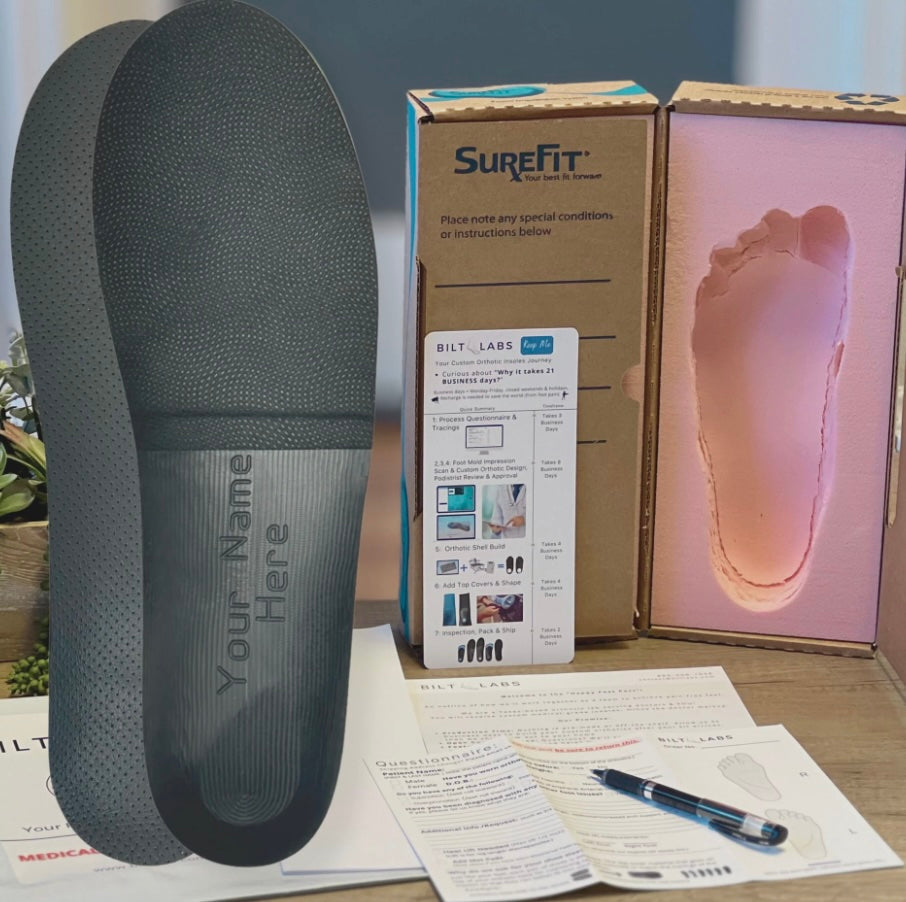
As the need for more precise support becomes clear, we offer custom orthotics tailored to each individual's foot structure and movement patterns. Using digital foot scans and gait analysis, we create support that aligns with how each foot bears weight throughout the day.
Supporting Consistency Over Time
Consistency is a major factor in long-term improvement. Support that fits naturally into daily routines is more likely to be worn regularly, helping maintain alignment and stability across repeated use rather than providing only occasional relief.
Reassessing Progress And Comfort
Needs can change as routines, footwear, or activity levels shift. We encourage periodic reassessment to ensure support continues to match daily demands. Our foot orthotics collection is designed to support these changes by offering structured, long-term solutions that adapt to how your feet are used over time.
Guided Support Options People Commonly Consider
When movement-based approaches alone do not yield sufficient improvement, many people begin exploring guided support options. These approaches are typically more structured and are often chosen when flat feet continue to affect comfort, balance, or daily consistency despite personal efforts.
Understanding What Guided Support Usually Involves
Guided support often starts with a closer evaluation of how the foot behaves during movement. This may include observing walking patterns, weight distribution, and alignment under load. The goal is not to label the foot, but to understand how it responds to everyday demands.
When People Look Beyond Self-Guided Methods
Many people explore guided options after noticing that progress has plateaued. When discomfort, instability, or fatigue continues despite consistent effort, additional insight can help clarify what the foot needs to function more efficiently.
How Structured Guidance Fits Into Daily Life
One concern people often have is whether guided approaches are practical long term. In reality, these methods are typically designed to integrate into daily routines rather than disrupt them. Guidance focuses on repeatable strategies that support consistency during real-world activity.
The Role Of Professional Movement Support
Some individuals explore physical therapy for flat feet to better understand movement mechanics and improve control. This approach often emphasizes coordination, alignment, and gradual progression rather than quick fixes.
Combining Guidance With In-Shoe Support
Guided approaches are sometimes paired with external support options. In these cases, orthotic treatment for flat feet complements movement strategies by helping manage alignment and load within footwear during daily activity.

Final Thoughts
Flat feet are often discussed as a condition that needs to be corrected, but meaningful improvement usually comes from a more practical perspective. Understanding how your feet move, what they need during daily activity, and which strategies fit your routine makes a real difference over time.
We design custom orthotics using digital scans and gait analysis to support alignment and consistency inside everyday footwear. Our focus is on creating support that works with your movement patterns rather than forcing change, helping flat feet function more efficiently during real-world use.
If you’re deciding how to fix flat feet in a way that feels sustainable, combining awareness, consistency, and the right support can create lasting improvements. At Stride Soles, we believe progress starts with understanding your feet and choosing solutions that support them every step of the way.
Frequently Asked Questions: How To Fix Flat Feet
Can flat feet actually be fixed?
Flat feet usually can’t be permanently changed in shape, but function, comfort, and stability can improve significantly with consistent movement habits and the right in-shoe support.
Do exercises help flat feet?
Exercises can support coordination and control, especially when done consistently. They often work best as part of a broader strategy rather than as a standalone solution.
When should someone consider guided support?
Many people explore guided support when progress plateaus or discomfort affects daily routines, helping them better understand movement patterns and alignment needs.
Are insoles necessary for flat feet?
Insoles are commonly used to support alignment and manage load inside footwear. They help provide consistency during standing and walking throughout the day.
How long does it take to see improvement?
Improvement is usually gradual. Some people notice better stability or endurance within weeks, while others experience changes over longer periods with consistent use.
Do flat feet get worse with age?
Flat feet can become more noticeable over time if daily demands increase or support needs change, especially without consistent movement habits or footwear support.
Can flat feet affect other parts of the body?
Flat feet can influence how force moves through the lower body, sometimes affecting balance or movement efficiency beyond the foot itself.
How does Stride Soles approach flat feet support?
We use digital foot scans and gait analysis to design custom orthotics that support how flat feet manage load and movement inside everyday shoes.
Reviewed for clinical accuracy by Dr. Zac Cartun, MD, Chief Medical Officer at Stride Soles. Last reviewed April 2026. This article is for informational purposes and is not a substitute for medical advice from a licensed clinician.